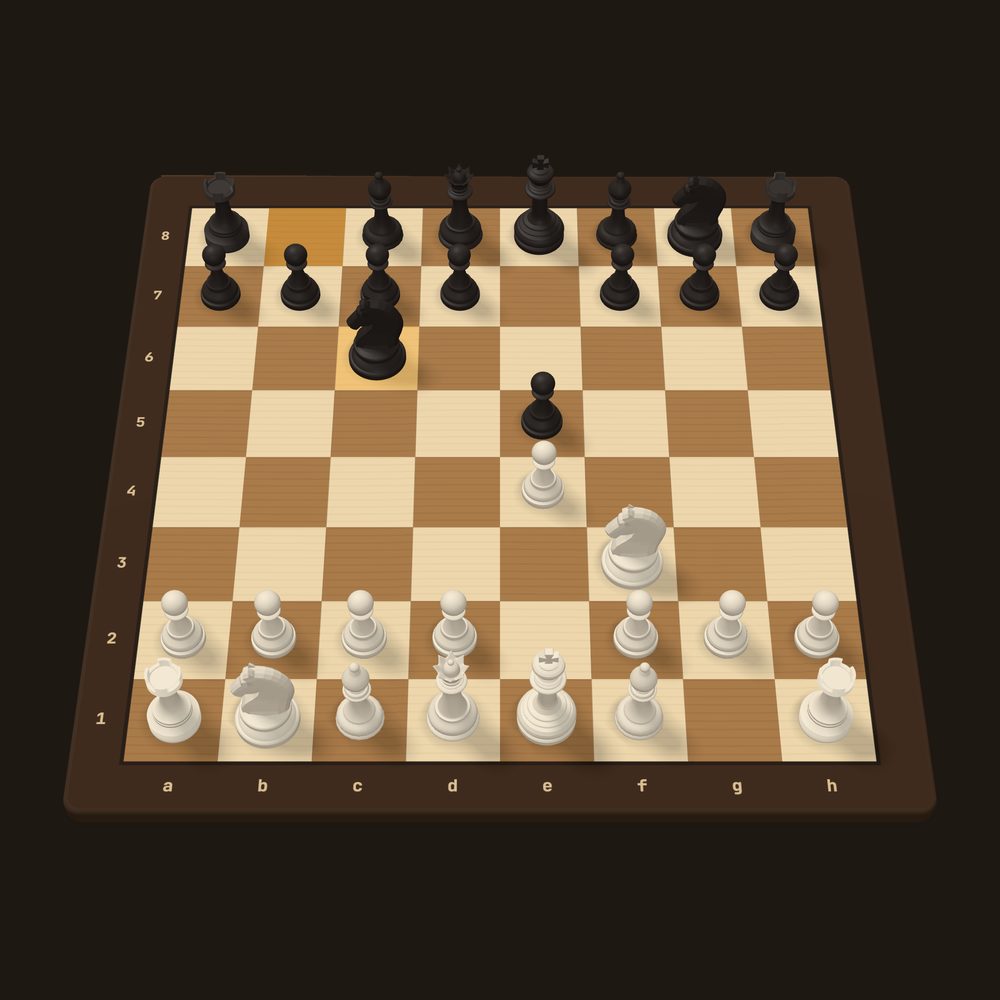
1Each piece moves its own way: rooks along lines, bishops on diagonals, knights in an L.
2Win by checkmating the opponent's king: it is attacked and has no safe move.
3A pawn that reaches the far side becomes a queen, rook, bishop or knight.
4Two special moves: castling moves king and rook at once, and en passant takes a pawn that just ran past.
Questions
Checkmate your opponent's king. This means the king is in a position to be captured (in check) and there is no legal move to escape. Win by checkmating your opponent's king (the king is in check with no legal escape). The game is a draw if: stalemate (no legal moves but not in check), insufficient material, threefold repetition, or the 50-move rule.
Each player starts with their pieces arranged on the two rows closest to them. From left to right on the back row: rook, knight, bishop, queen, king, bishop, knight, rook. The front row is filled with eight pawns. White pieces go on rows 1-2, black on rows 7-8. The queen always starts on her own color (white queen on white square, black queen on black square).
Control the center of the board with your pawns and pieces early in the game. Develop your knights and bishops before your queen in the opening. Castle early to protect your king and activate your rook.
Chess originated in India around the 6th century as 'chaturanga' and evolved through Persia and the Arab world before reaching Europe by the 10th century. Modern rules were standardized in the 19th century.
 boardgames.zone