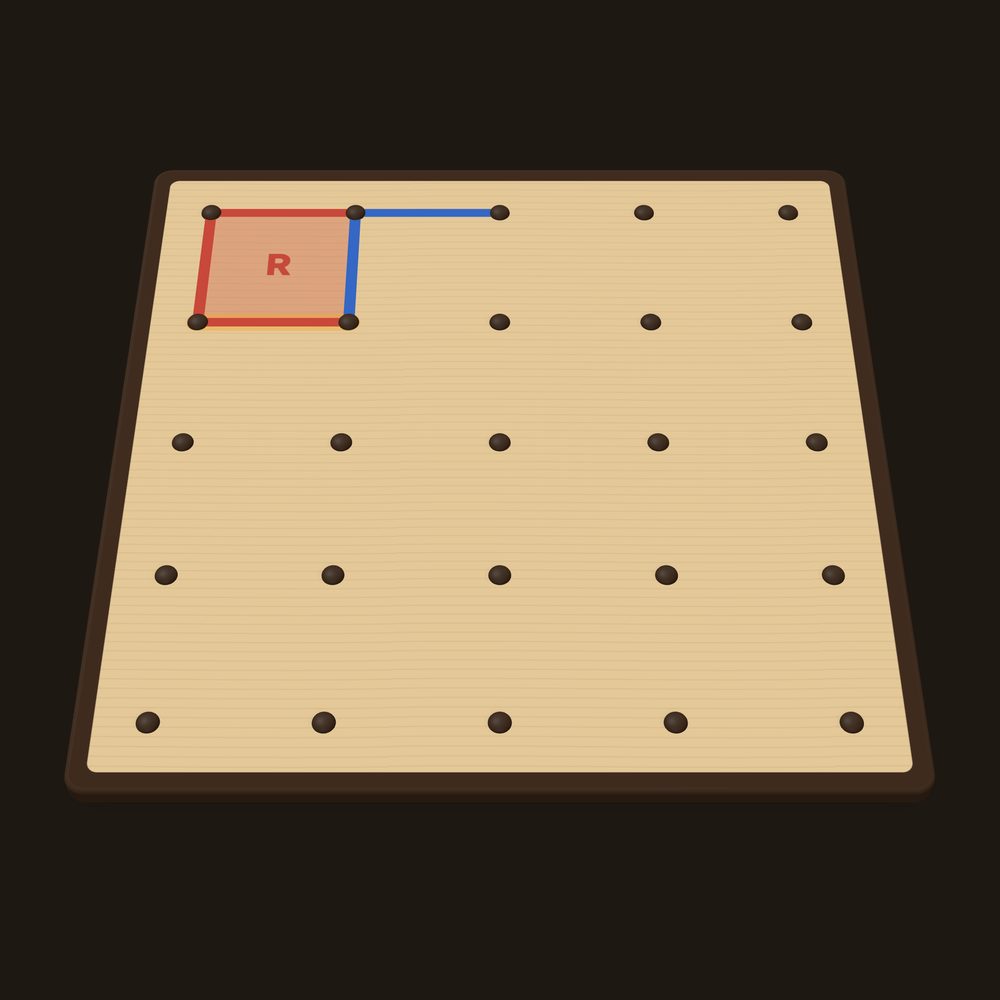
1Draw one line between two adjacent dots per turn.
2Close the fourth side of a box to claim it and draw again.
3Avoid drawing a box's third side, which hands it to your opponent.
4When every line is drawn, the player with more boxes wins.
Questions
Complete more squares than your opponent. The player who has claimed more boxes when all are completed wins. Count the boxes marked with each player's initial.
Draw a grid of dots (commonly 6x6 or larger). Players choose who goes first. Each player needs a different color pen or uses initials to mark claimed boxes.
In the opening, avoid completing three sides of any box (setting up your opponent). Create 'chains' of three-sided boxes to capture in sequence. When forced to open a chain, give away the shortest chain possible.
Dots and Boxes was first published in the 19th century by French mathematician Edouard Lucas. Despite simple rules, optimal play requires complex combinatorial analysis.
 boardgames.zone